
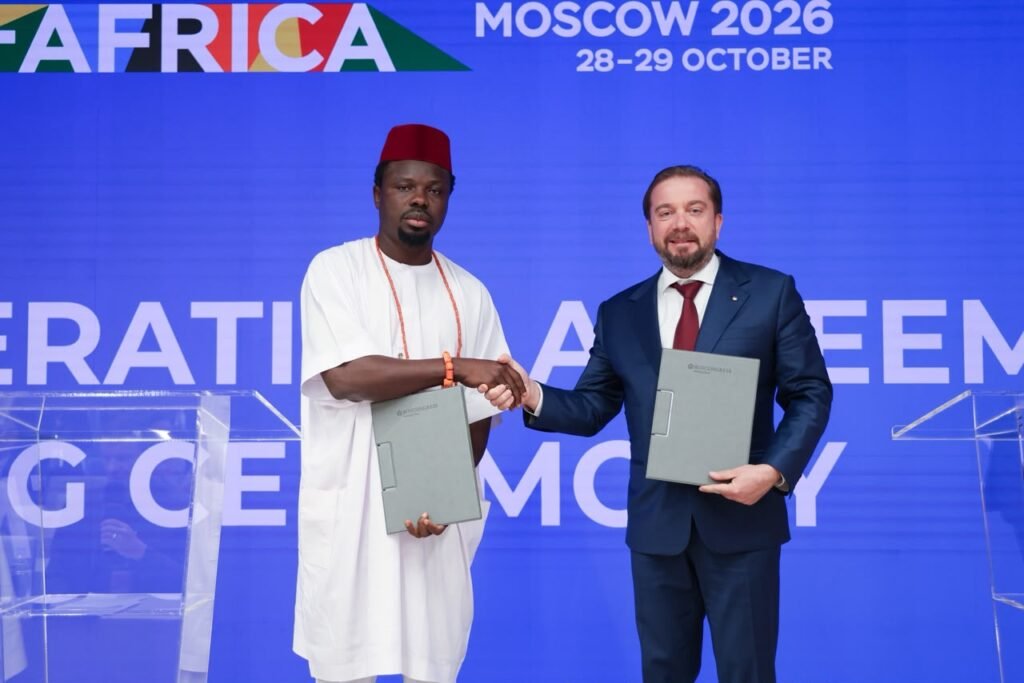
On October 28–29, 2026, Moscow became the center of a fresh conversation about Russia–Africa cooperation. The 3rd Russia–Africa Summit brought African leaders and institutions to the Russian capital. In the middle of it, the Roscongress Foundation and Jet Age Nation Builders (JANB) signed a five-year strategic cooperation agreement.
Headlines can blur the details, so let’s be clear from the start. This is not a treaty between Russia and the whole of Africa. It is a partnership between two institutions: one Russian, one African, and youth-led. That difference matters, and it is also what makes the story interesting.
In this post, we break down what happened, who was involved, what the agreement covers, and why it could matter for the next generation of Africans.
What Happened in Moscow
The Chairperson of the African Union Commission, H.E. Mahmoud Ali Youssouf, was received by Russian President Vladimir Putin at the Kremlin on the occasion of the 3rd Russia–Africa Summit. His presence signaled the African Union’s interest in building international partnerships that support peace, security, and sustainable development.
During the same Russia–Africa engagements, the Roscongress Foundation and Jet Age Nation Builders formally sealed their five-year agreement. Ambassador Young Piero Omatseye signed on behalf of JANB’s steering committee. He serves as African Coordinator of Jet Age Nation Builders and as Director of Parliament for the African Union Commission Simulation Agenda 2063.
Who Are the Key Players?
The Roscongress Foundation
Roscongress is a Russian organization best known for running large international business and economic forums. Its work centers on bringing governments, companies, and institutions together to talk, trade ideas, and build networks. If you have heard of major Russian economic gatherings, there is a good chance Roscongress was behind the scenes.
Jet Age Nation Builders (JANB)
JANB is an African-led organization focused on youth engagement and institutional collaboration. It positions itself as a voice for Africa’s emerging generation. Its coordinator’s role in the African Union Commission Simulation Agenda 2063 links it to a program that lets young people practice how continental governance works.
The African Union Commission
The AU Commission is the executive arm of the African Union. Its chairperson attended the summit meetings, but the Roscongress–JANB agreement is a separate document between the two organizations.
What Does the Agreement Actually Cover?
According to the announcement, the agreement sets up a framework for:
- Expanding international networks between African and Russian institutions
- Knowledge exchange, meaning sharing ideas, research, and experience
- High-level forums where leaders, professionals, and young people can meet
- Strategic partnerships that connect institutions across both regions
It runs for five years, which gives both sides time to plan real programs instead of one-off events.
It is worth noting what the announcement does not include. It does not list specific funding amounts, scholarship numbers, or investment deals. A framework agreement works like a foundation. It opens doors and sets rules for working together, but the actual results depend on what gets built on top of it in the coming years.
A Quick Look Back: How Russia–Africa Relations Got Here
The Russia–Africa summit series is fairly recent. The first one took place in Sochi in 2019, and the second in St. Petersburg in 2023. The 2026 gathering is the third, which shows that both sides are trying to make the meetings a regular feature of their relationship.
Russia and Africa have a long history that goes back to the Cold War, when the Soviet Union supported several African independence movements and trained thousands of African students in Soviet universities. In recent years, Russia has been working to rebuild and widen those ties through trade, education, energy, and security discussions.
Of course, Russia is not the only global power courting Africa. China, the European Union, the United States, Turkey, India, and Gulf countries are all competing for partnerships on the continent. That is why many African leaders now talk about “diversifying partnerships” and choosing relationships that serve African priorities first.
Why Youth Are at the Center of This Story
Africa has the youngest population in the world. The median age is around 19, and millions of young people enter the job market every year. Whatever the continent builds in the next few decades will be shaped by this generation.
That is why youth-led organizations like JANB matter in international conversations. For too long, big global agreements were negotiated by older leaders, with young people watching from the sidelines. When a youth-focused body signs a five-year deal at a major summit, it suggests a shift, at least in how the invitation list is drawn up.
For young Africans, the possible benefits include:
- Exposure: a seat at international tables that were once out of reach
- Networking: direct links to Russian institutions, businesses, and universities
- Skills and learning: exchange programs and shared knowledge
- Voice: a platform to push for youth priorities in global talks
The keyword is “possible.” The benefits will only become real if the programs are well designed, open to many young people, and tracked with clear results.
How This Connects to Agenda 2063
Agenda 2063 is the African Union’s long-term plan for the continent. It was adopted in 2013 and sets out a 50-year vision of a peaceful, prosperous, and united Africa. Its goals cover education, infrastructure, trade, governance, and the role of young people and women.
Ambassador Omatseye’s link to the Agenda 2063 simulation program gives the agreement a natural tie to this vision. The idea is simple: if young people learn how continental systems work today, they will be better prepared to run them tomorrow. International partnerships that support learning can help move Agenda 2063 from paper to practice.
What This Means for African Businesses and Professionals
You may be wondering whether this matters if you are not a policymaker or a student. It could.
Forums and networks are where business deals often begin. When institutions on both continents get comfortable working together, it can lead to:
- New trade and investment conversations
- Partnerships in technology, energy, agriculture, and education
- Events where entrepreneurs can pitch, learn, and connect
- Better access to information about opportunities in Russia and across Africa
Still, smart businesses will do their homework. Any partnership, in any country, should be checked for legal terms, payment risks, and real benefits before money or time is committed. A handshake at a summit is a starting point, not a guarantee.
A Balanced View: Opportunities and Questions
Good analysis looks at both sides, so here are the main things to keep in mind.
Reasons for optimism
- Africa is engaging many partners instead of relying on one or two
- Youth voices are getting formal recognition
- A five-year timeline allows for long-term planning
- Knowledge exchange can build skills on both sides
Questions worth asking
- Which specific programs will come out of this agreement?
- How will young people from different African countries be selected to take part?
- How will success be measured and reported publicly?
- How will the partnership stay focused on African priorities?
Keeping an eye on these questions will help citizens and journalists hold all parties accountable as the details emerge.
What to Watch for Next
Over the coming months, watch for announcements about:
- Specific forums or events planned under the agreement
- Exchange or training programs for young Africans
- Institutional partners joining from either region
- Public reports showing progress and outcomes
If these show up, the agreement will have moved from ceremony to action. If they don’t, it will remain a symbol, which is still meaningful, but less useful.
Frequently Asked Questions
What is the Russia–Africa Summit?
It is a recurring meeting between Russia and African countries to discuss cooperation in areas like trade, education, energy, and security. The first was held in Sochi in 2019, the second in St. Petersburg in 2023, and the third in 2026.
What agreement was signed in Moscow?
The Roscongress Foundation and Jet Age Nation Builders signed a five-year strategic cooperation agreement. It sets up a framework for networks, knowledge exchange, high-level forums, and partnerships between African and Russian institutions.
Is this an agreement between Russia and the African Union?
No. The African Union Commission chairperson took part in the summit and met President Putin, but the agreement itself is between Roscongress and JANB. It is an institutional partnership, not a government-to-government treaty.
Who signed on behalf of Jet Age Nation Builders?
Ambassador Young Piero Omatseye, JANB’s African Coordinator and Director of Parliament for the African Union Commission Simulation Agenda 2063, signed on behalf of the JANB steering committee.
What is Jet Age Nation Builders?
JANB is an African-led organization focused on youth engagement and institutional collaboration. It aims to give Africa’s emerging generation a stronger voice in international partnerships.
How can this agreement benefit young Africans?
It could open doors to international networks, exchange programs, forums, and learning opportunities. The actual benefits will depend on the programs launched under the agreement.
What is Agenda 2063?
Agenda 2063 is the African Union’s 50-year blueprint for building a peaceful, integrated, and prosperous Africa. It highlights youth, education, trade, and good governance as key priorities.
Does the agreement include funding or investment amounts?
The announcement does not mention any figures. It describes a cooperation framework, not a financial package.
Why is Russia increasing engagement with Africa?
Russia is seeking stronger political, economic, and educational ties across the continent, as many other global powers are doing too. For African countries, the aim is to widen options and negotiate better terms.
Where can I follow updates?
Watch official channels from Roscongress, JANB, and the African Union Commission, along with credible news outlets, for confirmed program announcements.
Conclusion
The signing in Moscow is a real milestone, but it is best understood for what it is: a five-year institutional partnership between Roscongress and Jet Age Nation Builders, set against the backdrop of the 3rd Russia–Africa Summit.
Its biggest strength is symbolic and strategic. A youth-focused African organization now has a formal channel to a major international network. Whether that channel carries real opportunities for young Africans depends on what comes next: clear programs, open participation, and honest reporting.
For now, the sensible approach is to stay interested but stay informed. Follow the announcements, ask good questions, and judge the partnership by its results. If it delivers, it could be a useful piece of Africa’s wider push to build global relationships on its own terms.


